
If you read my articles, you know I compare weddings to a movie production. The main difference (besides cost) is that movies get second and third takes. Weddings get one. So how do you choose the people who capture it? Look past the portfolio at how they work with the clock and the rest of the team: how long they need after the ceremony, when their coverage ends, how their lights behave in a dark room, and whether they will coordinate with the entertainment so nothing happens without a camera ready. Then make two decisions before you build the timeline: the first look, and the light.
Pros, and not-so-pros
As with any profession, you will find both, and you will be able to tell them apart. The pros return emails promptly, dress well, and treat your time with respect, and they have experience working alongside other providers. Ask to see a full wedding, start to finish, not a highlight reel. Ask how many shooters come, and when you'll see the finished photos and film. They will give you a window. Write it down.
Time
Your photographer should get the formals (family, wedding party, the two of you) done in about 45 minutes to an hour. A useful way to plan it: about three minutes per family grouping, so fifteen groupings is around 45 minutes. Make the list before the day and give it to the photographer and to one relative who knows everyone's face. If photos take too long, guests are left waiting, the food gets cold, and the reception starts on a sour note. Ask how much time your photographer needs, and believe the answer.
The first look, or the aisle
A first look means the two of you see each other before the ceremony, privately, with the cameras there. What it buys you is time: most of the formals happen before the ceremony, and you get to go to your own cocktail hour. What it costs you is the moment at the top of the aisle, and an earlier morning. I have watched both work many times. The first look wins on the clock; the aisle wins on the moment. Neither is wrong. Decide it now, because everything downstream (cocktail hour, the entrance, dinner) moves with it.
The light
Golden hour is roughly the last hour before sunset, and it is when the photos you have been picturing get taken. On this coast that is around 7:20 to 8:20 on a Saturday in mid-June and around 4:50 to 5:50 in late October. My rule of thumb: with no first look, I want the ceremony finished about two hours before sunset so the formals and your portraits happen in daylight; with a first look, an hour is enough. A sunset step-out is fifteen minutes at about sunset minus thirty, and it should land during dinner or the cake gap, never on the entrance or the toasts. Pick your date, and this tool gives you sunset, golden hour, last light, and the time your ceremony should end.
Coverage
How long is your photographer contracted to stay? If coverage ends long before the reception does, they miss key moments, and sometimes a photographer will ask the entertainment to hurry things along so they can get their shots, which leads to a rushed agenda. If you can't keep them to the end, keep them through the important events and a little dancing. If you can, keep them until the end. Lots of fun stuff happens in the last hour, and too often nobody is there to capture it. The Run of Show Builder puts a 'coverage ends' mark on your timeline so you can see exactly what falls after it.
Lights and gear
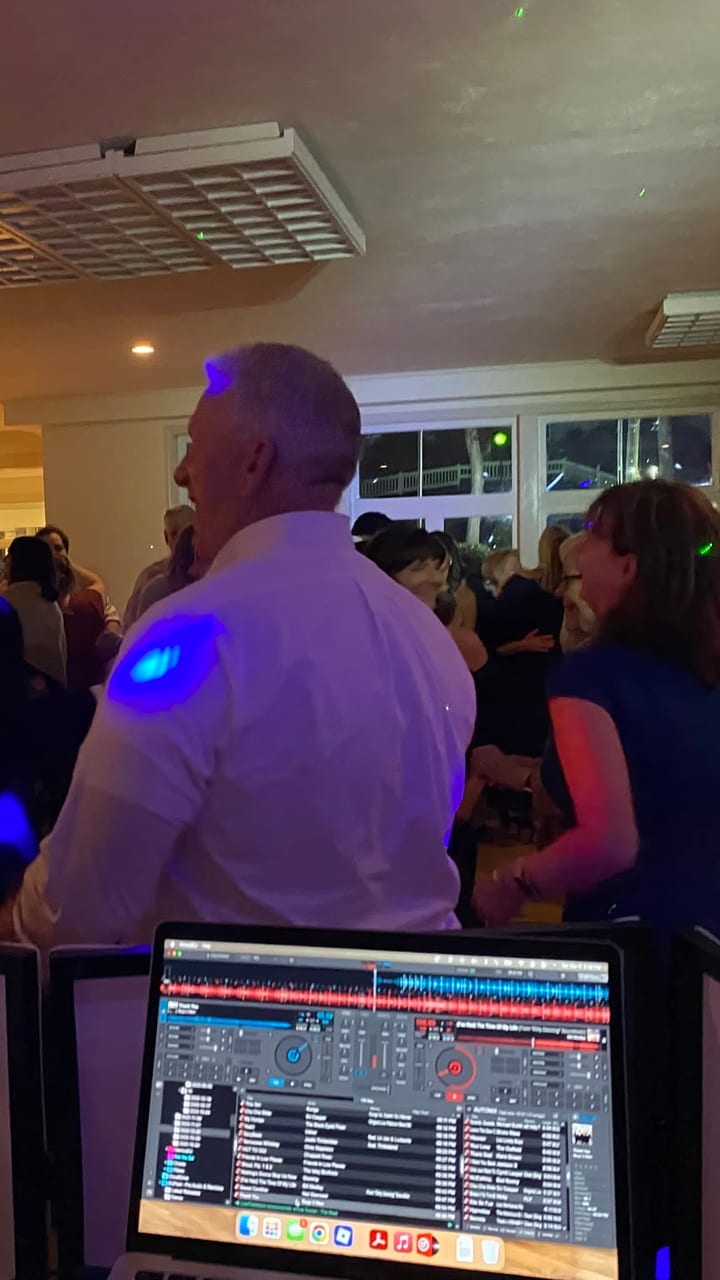
Be mindful that their lights and equipment do not interfere with your guests or the other providers. Some lights are too bright and wash out the room you paid to light. A videographer walking the dance floor with a big light on the camera blinds people, and people who are blinded leave the floor. The best pros have the best tools and know how to use them.
Team players
Be sure your photographer and videographer are willing to coordinate with the entertainment so the reception flows. If they are not part of the team, communication lapses and the night suffers. On the other side, make sure your entertainment will not let anything important happen without the photographer knowing and ready. In twenty years, the moments I have seen missed were never about talent. They were about nobody saying 'thirty seconds' to the person with the camera. And if someone is shooting phone clips for you the same night, the photographer's shot comes first; the next article covers how those two jobs share a room. Here is the sheet with my questions on it, with room for two candidates side by side.
What usually goes wrong here
The family list that lived in somebody's head. The 4 o'clock ceremony in late October with no first look, so the portraits happened in the dark. Coverage that ended at 9 on a night that ended at 11. All three are visible on paper months out.
Keep all of this in mind when choosing who captures your day. Overlooking details is the difference between capturing the memories you want and capturing random moments.
Thanks! Chuck